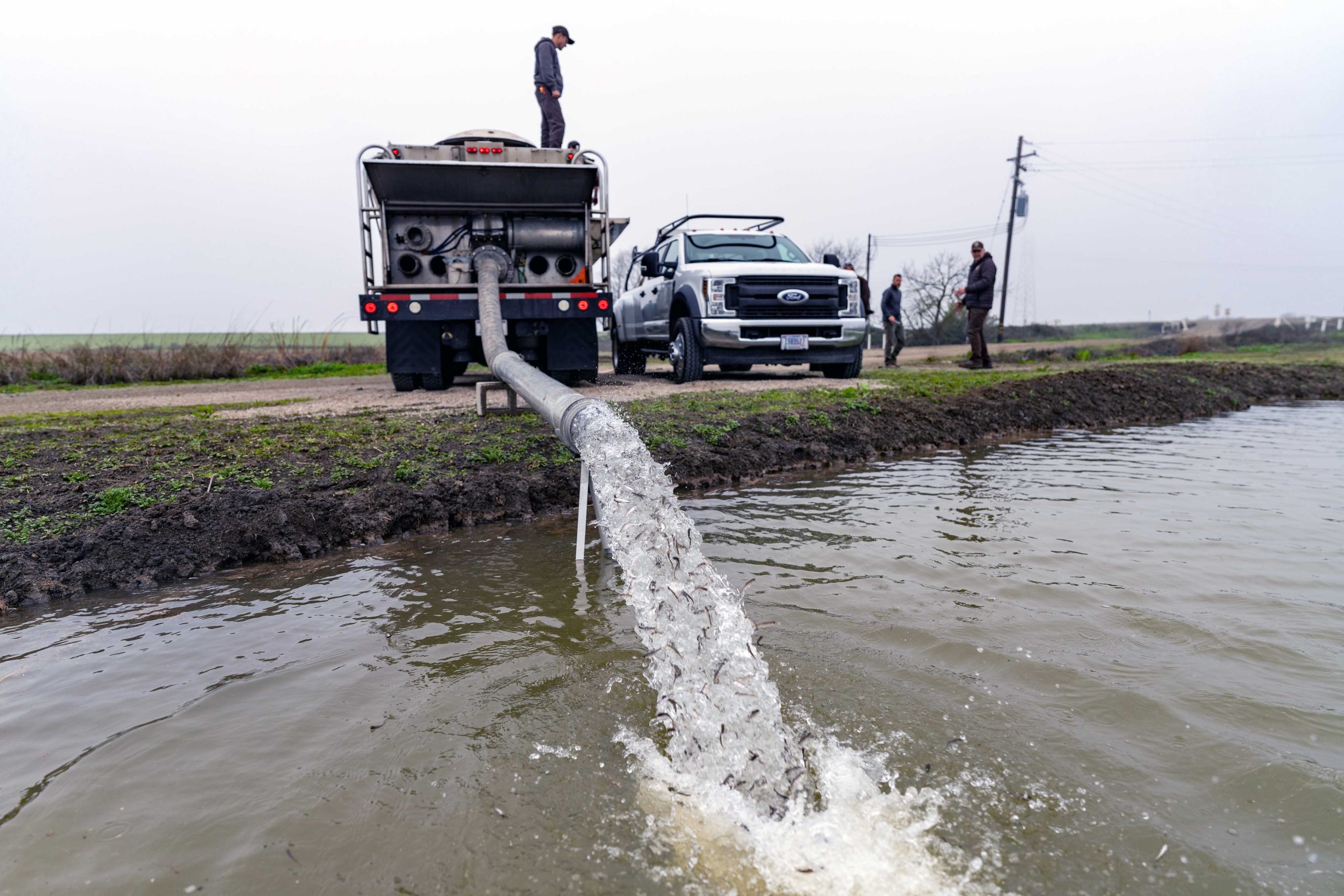
Nearly two million juvenile salmon released into winter-flooded rice fields in hopes of stronger survival rates to the Pacific ocean
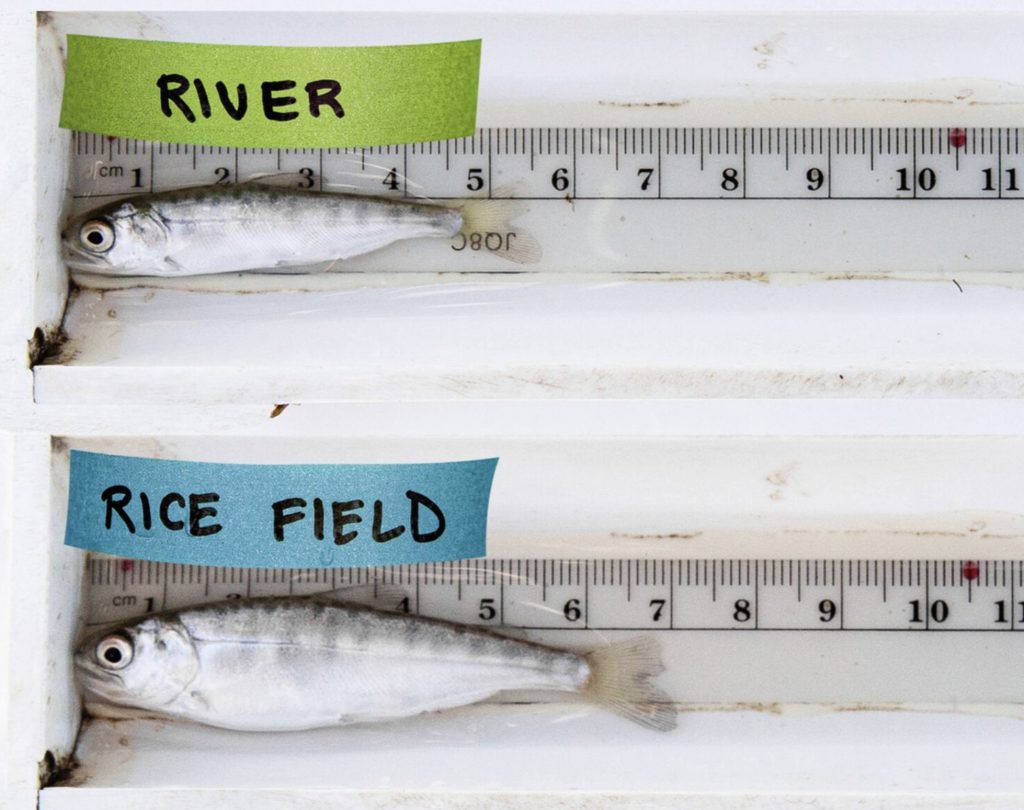
Studies show salmon double in size with better access to food sources produced on floodplain habitats, improving health during outward migration
Click Here to watch the release VIDEO. Please Subscribe to our NorCalGuides channel to stay up to date with Salmon Recovery News
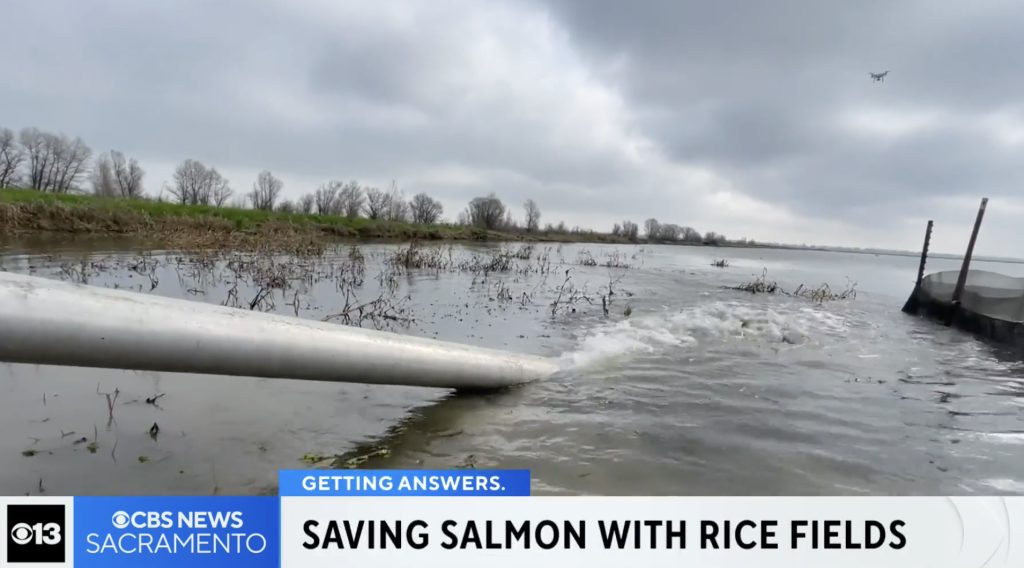
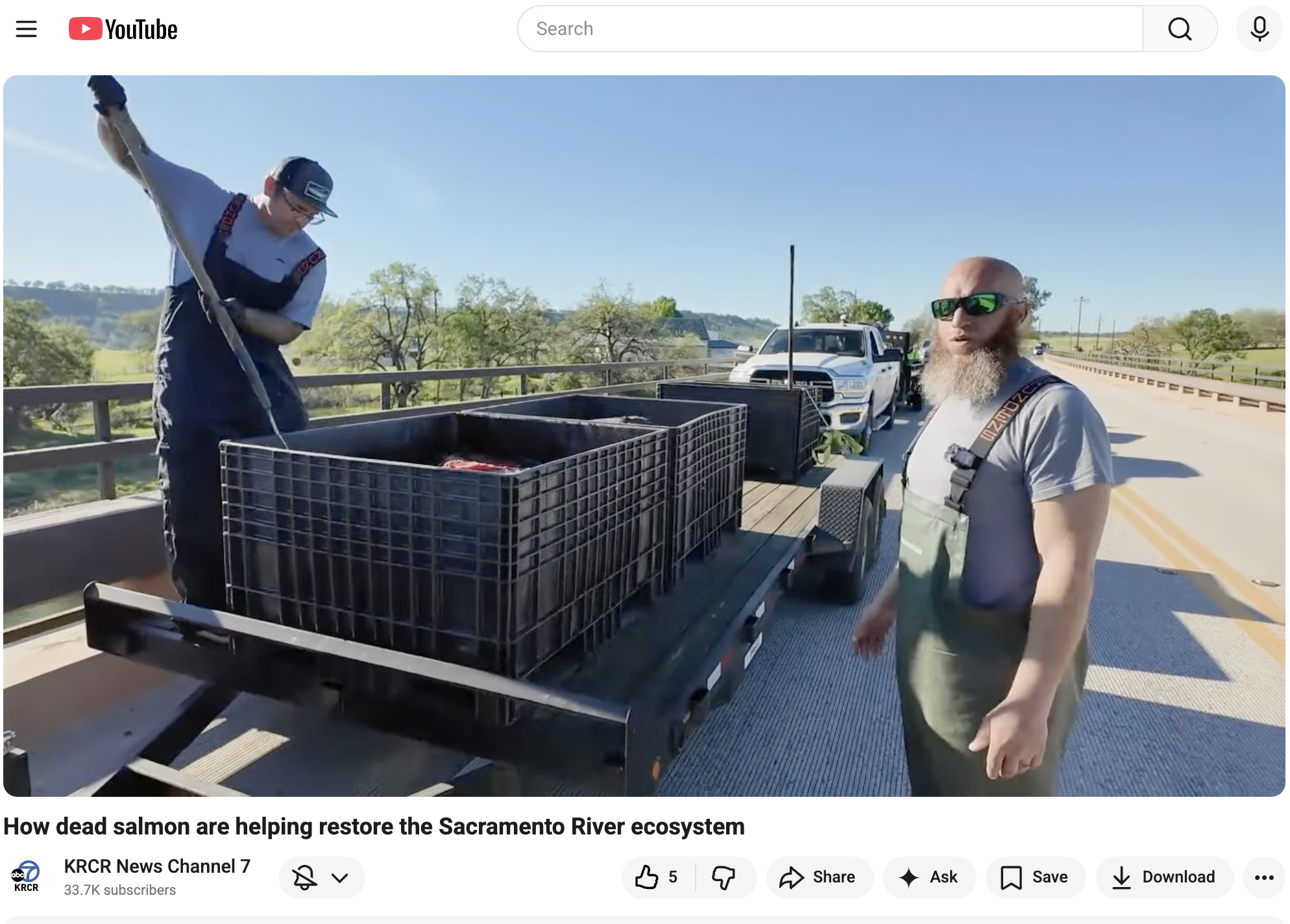
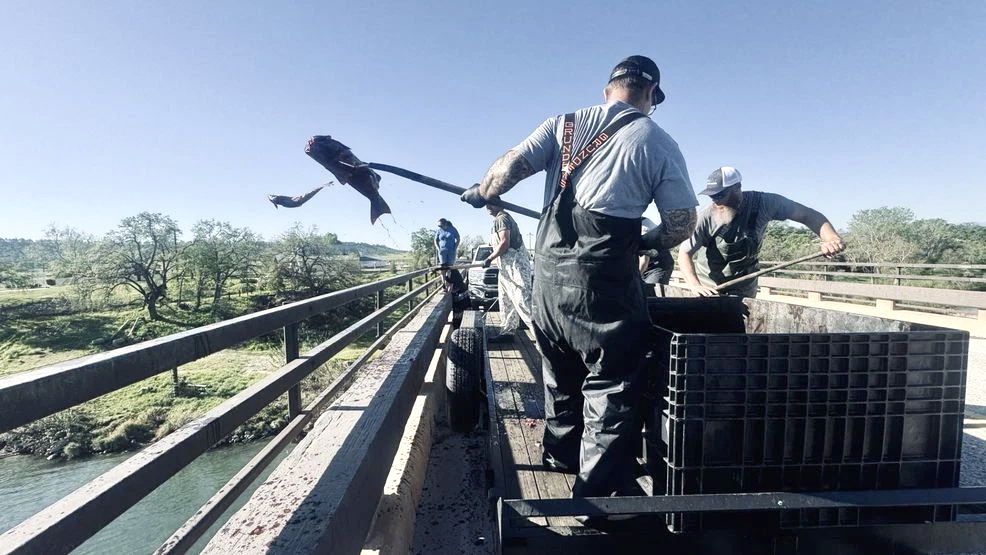
Woodland, CA — Marking one of the largest salmon releases of its kind, a coalition of rice farmers, fishermen, water suppliers, researchers, and conservationists, in partnership with U.S. Fish and Wildlife Service’s Coleman National Fish Hatchery, has introduced 1.8 million salmon fry into winter-flooded rice fields near the Sacramento River in hopes of contributing to higher numbers of healthier fish reaching the Pacific Ocean and returning to the valley as adults.
The multiyear project is introducing fall-run salmon fry from Coleman National Fish Hatchery into working ricelands at Conaway Ranch and Knaggs Ranch, located in Yolo County. This large-scale hatchery release is a “fish on floodplain farm fields” project designed to demonstrate how winter ricelands can be managed to provide wetland-like food-rich habitat for migrating salmon.
“We believe hatchery fish released into rice fields, where they have access to abundant food, will thrive, similarly to how salmon historically benefitted from feeding on natural floodplains,” said James Stone, President of the NorCal Guides and Sportsmen’s Association. “Diversifying our hatchery release strategies is a top priority, allowing different cohorts of fish to respond uniquely to environmental conditions. Tracking juvenile survival, harvest contribution, and adult river return rates over the next three to four years will help us determine which release methods perform best under varying hydrological conditions.”
“After many years of developing this type of rice field management practice to support natural-origin salmon, it is rewarding to see it implemented and evaluated at a larger scale using hatchery fish,” said Paul Buttner, Manager of Environmental Affairs for the California Rice Commission. “This work would not be possible without implementation funding from the USDA’s Natural Resources Conservation Service, monitoring funding by the Floodplain Forward Coalition and the U.S. Bureau of Reclamation, as well as the support of our many partner organizations. We look forward to evaluating adult return rates in the coming years.”
Spearheaded by The Bridge Group, a coalition of farmers and fishermen committed to rebuilding salmon populations, the project builds on research pioneered by the University of California and California Trout that shows salmon in wetlands grow faster and healthier than those who remain in leveed river channels. Over the next decade, under a plan crafted by the U.S. Fish and Wildlife Service, researchers and partner agencies, the project will place approximately two million fall-run salmon fry into winter-flooded rice fields each year.
“We are extremely appreciative of the U.S. Fish and Wildlife Service’s willingness to engage and support this effort,” said Roger Cornwell, Chair of the Sacramento River Settlement Contractors. “With more extreme droughts and floods, and an increasingly dynamic environment, it is essential that we pursue all available options to improve and restore our fishery. This program is one of several actions we are actively implementing in the Sacramento Valley.” Read more about some of the conservation projects from the Sac River Contractors: Click Here
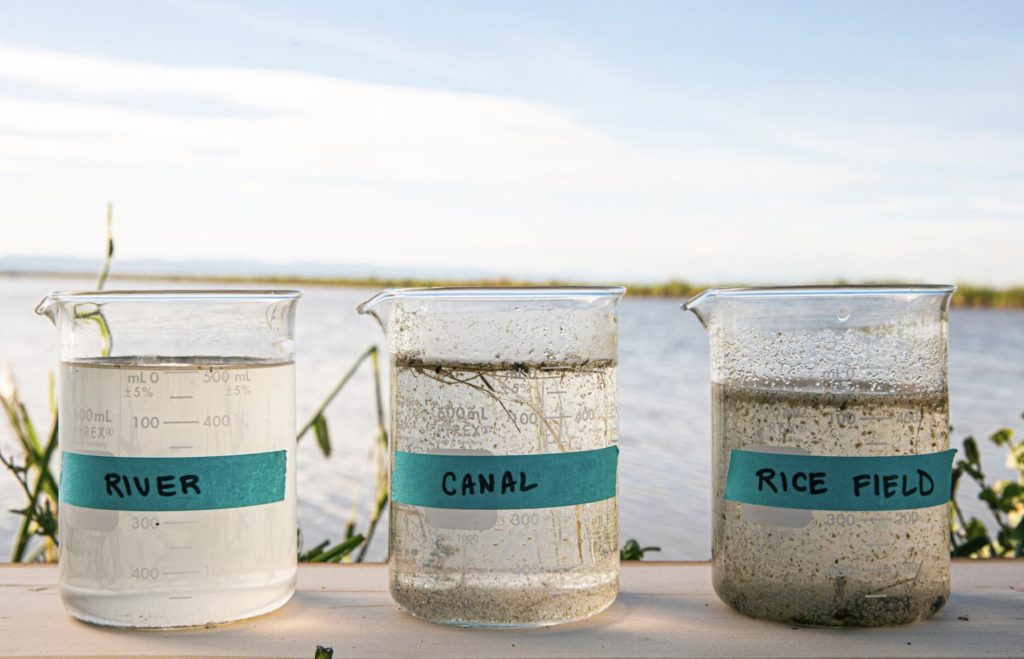
Recent University of California, Davis research demonstrates how rice fields provide vital ecological benefits by mimicking the historical floodplain environments young salmon once relied on while migrating to the ocean. Simply put, salmon feeding on zooplankton (fish food) in intentionally flooded farm fields bulk up—often growing two to five times faster than in rivers— giving them the size and strength needed to improve their chance of reaching the Pacific Ocean.
“We’re encouraged by the momentum of the Bridge Group and the strong engagement of partner agencies as this effort ultimately reflects the power of action-oriented collaboration,” said George Bradshaw, Pacific Coast Federation of Fishermen’s Association President. “The project demonstrates the value of innovative, forward-thinking approaches. Supporting salmon and our fisheries requires all hands-on deck, and because of this work, the future of the Central Valley is considerably brighter.”
Additional studies by UC Davis link juvenile salmon that fed on floodplain habitats with increased numbers of returning adults. The project studies fish life history through eye lenses and otoliths—structures found in a fish’s ears—to track where fish were born, where they traveled, and where they fed, based on unique sulfur and carbon signatures identified after adult salmon have spawned.
As part of the “fish on flooded farm fields” project, scientists will estimate adult returns of the fish using cutting-edge parentage-based genetic monitoring.
“We’re encouraged by these initial steps toward more holistic hatchery management and diversified salmon life-history strategies,” said Sarah Bates, Pacific Coast Federation of Fishermen’s Association Board Member. “The Central Valley has been profoundly altered over the past two centuries, and replicating natural conditions as closely as possible is essential to building resilient fish populations and fisheries in a changing environment.”
John Atkinson with Golden Gate Fishermen’s Association added, “On behalf of the charter fleet, we are thrilled to see a range of innovative release strategies being implemented. It’s exciting to watch these ideas take shape on the ground, and we’re eager to see the results and what they mean for the long-term health of the fishery.”
The Bridge Group includes representatives from the Pacific Coast Federation of Fishermen’s Associations, Golden Gate Fishermen’s Association, NorCal Guides and Sportsmen’s Association, Northern California Water Association, the Sacramento River Settlement Contractors, and the California Rice Commission. Together, the group represents thousands of square miles of farmland across Northern California and hundreds of fishing businesses and guides operating from the Sacramento River to Monterey Bay and beyond the Oregon border. The U.S. Bureau of Reclamation and UC Davis Center for Watershed Sciences also provide technical and science support to the Bridge Group’s efforts.
DOWNLOAD THE FULL PDF FILE: CLICK HERE
Other Articles: