Dead salmon return to Sacramento River to restore nutrients and boost young fish survival
by Adam Robinson, Adam McAllister / North Coast News TV
Wed, March 18, 2026 at 12:38 PM
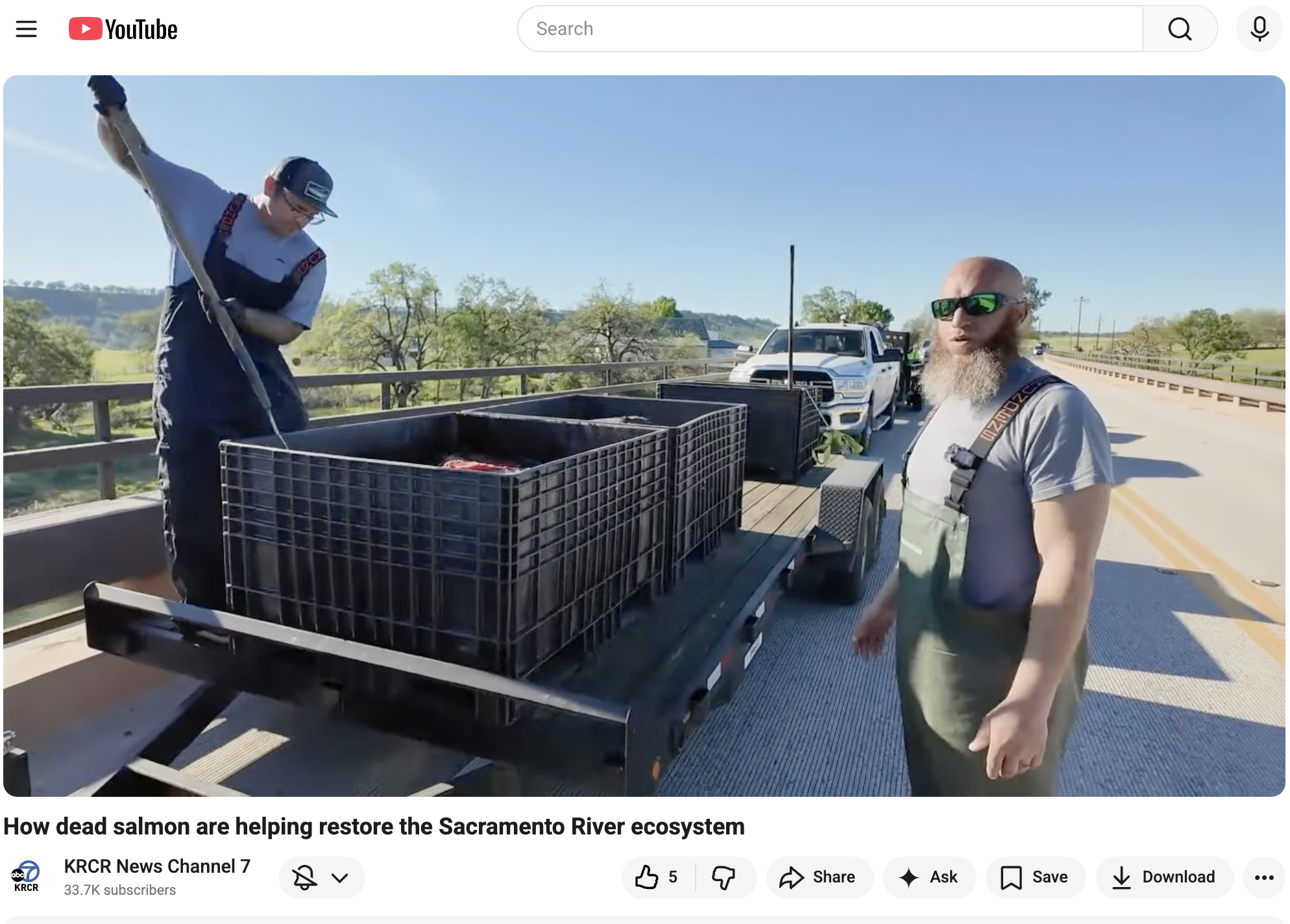
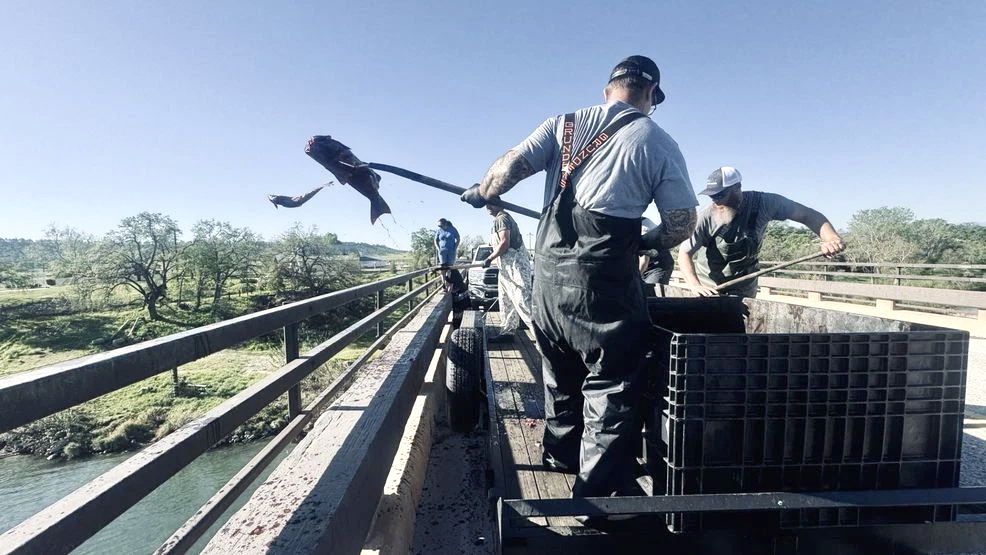
Photo Credit: Crews toss dead salmon from the Coleman National Fish Hatchery into the Sacramento River near Jellys Ferry Bridge in Tehama County, Calif., on Wednesday, March 18, 2026, to help replenish nutrients in the water. (KRCR Chief Photographer Adam McAllister)
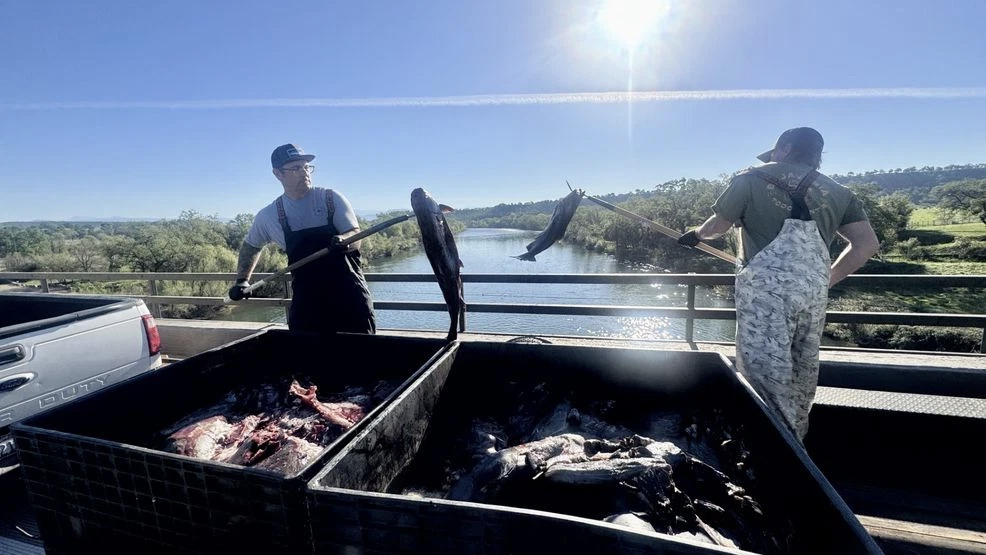
RED BLUFF, Calif. — Crews are putting dead salmon back into the Sacramento River, trying to rebuild something most people never see: the nutrients that keep the river alive.
Along a stretch near Jellys Ferry Bridge, workers are releasing fish carcasses from a nearby hatchery into the water. The goal is simple: feed the river so young salmon have a better chance of surviving.
“We’re taking carcasses from Coleman Fish Hatchery and putting them back into the river to reintroduce ocean-derived nutrients. Those nutrients are the building block for the entire ecosystem — for the bug life, for plant growth and for juvenile salmon trying to survive,” said Josh Peard, a fishing guide with Peard’s Fishing. “We’re losing these fish, and that’s having an impact not just on the river but on agricultural land, too.”
When salmon die after spawning, their bodies normally break down in the river, feeding insects, plants and other fish. But with fewer salmon returning in recent years, that natural cycle has weakened. The result shows up quickly. Fewer nutrients mean less food for young fish, making it harder for them to grow before heading to the ocean.
“Right now we’re extremely concerned with the salmon population. We’ve had a massive decline, and the Sacramento River stocks have been under heavy pressure from a lack of water coming out of Shasta and Keswick,” Peard said. “When flows drop during spawning, the nests can dry out or become vulnerable to predators. That’s been a big issue.”
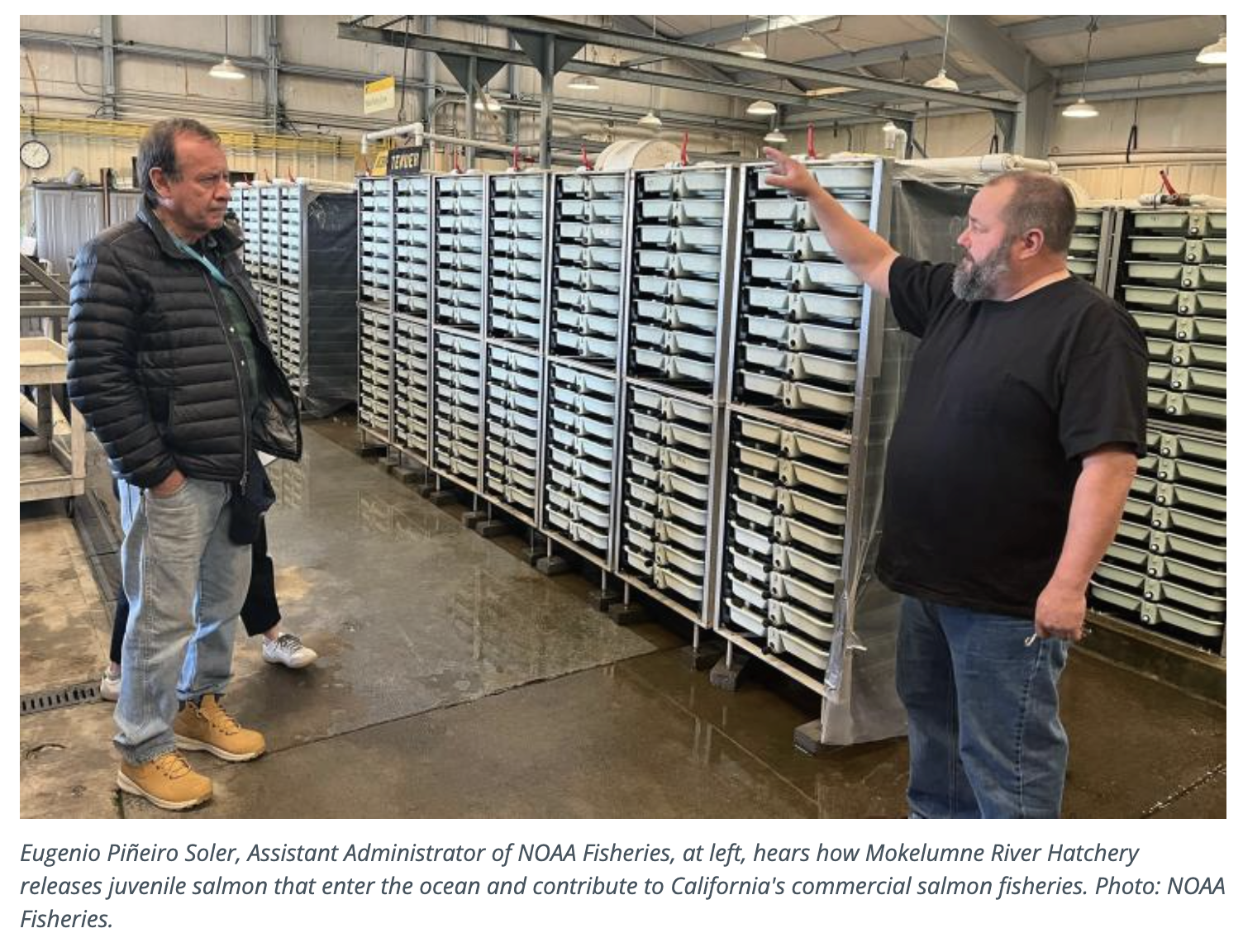
The program uses salmon from Coleman National Fish Hatchery, which was built decades ago to make up for habitat lost when Shasta Dam blocked natural spawning areas upstream.
The effort comes as salmon populations in California face steep challenges. Fishing seasons have been shut down in recent years because of low numbers, hurting both the ecosystem and local economies that depend on tourism.
On the Sacramento River, water levels play a major role. If flows drop at the wrong time, salmon eggs can dry out or become easy targets for predators.
At the same time, some conditions have improved. Strong water years and fishing closures have helped salmon numbers begin to recover, and limited seasons may reopen in some areas. Still, concerns remain about long-term survival.
Marine Sisk, lead traditional scientist for the fisheries and cultural resource team for the Winnemem Wintu Tribe, said the river’s health changes dramatically from the mountains to the valley.
“Putting carcasses back in the river is like an environmental safety net. It brings nutrients not just to fish, but to sediments, insects and everything that feeds off them. Even animals carry those nutrients to the shoreline, feeding trees and plants. It’d be nice if they did this everywhere — but it’d also be nice if there weren’t dams everywhere,” Sisk said. “You can tell the difference in river health from the mountains to the valley—you can smell it. Up high, the water is clear and pristine, but down here it stinks. How do we expect fish, or people, to survive if we treat the water like that? Everything depends on clean water.”
She supports the carcass program as a way to restore lost nutrients, but said bigger problems, including dams and pollution, continue to harm the river. Salmon, she said, are central to both the ecosystem and culture.
“The earth is a body, and water is its blood. Every river and stream is like a vein. When we pollute it or block it with dams, it’s like cutting off circulation; it changes everything in that system,” Sisk said. “Salmon are the water keepers. They help clean and maintain the river. This is salmon country — our people have always depended on them. Bringing salmon back isn’t just cultural, it could support an entire economy.”
For local communities, the stakes go beyond the river. Salmon fishing brings visitors who spend money at hotels, restaurants and stores. When seasons close, that income disappears.
Advocates say the issue also affects water management across California. If salmon populations fall low enough to be listed as endangered, stricter rules could limit water use for farms and cities. Groups representing fishermen, farmers and tribes are now working together more closely, pushing for solutions that balance water use with protecting fish.
“For the first time, farmers and fishermen are working side by side in meetings with regulators to try to fix this. It’s catastrophic if we lose these fish. Salmon are a keystone species — they impact everything from river life to the ocean. If these fish get listed as endangered, water will be more regulated, and that’s going to raise costs across California,” Peard said.
We need to thank Nor-Cal Guides & Sportsmens Association for making this project possible as well as for their continuous advocacy for our fisheries and outdoor lifestyles. Please contact me at PeardFishing or NCGASA.org for additional information or how to get involved with this projects or others.