Pacific Fisheries Management Council meetings in March
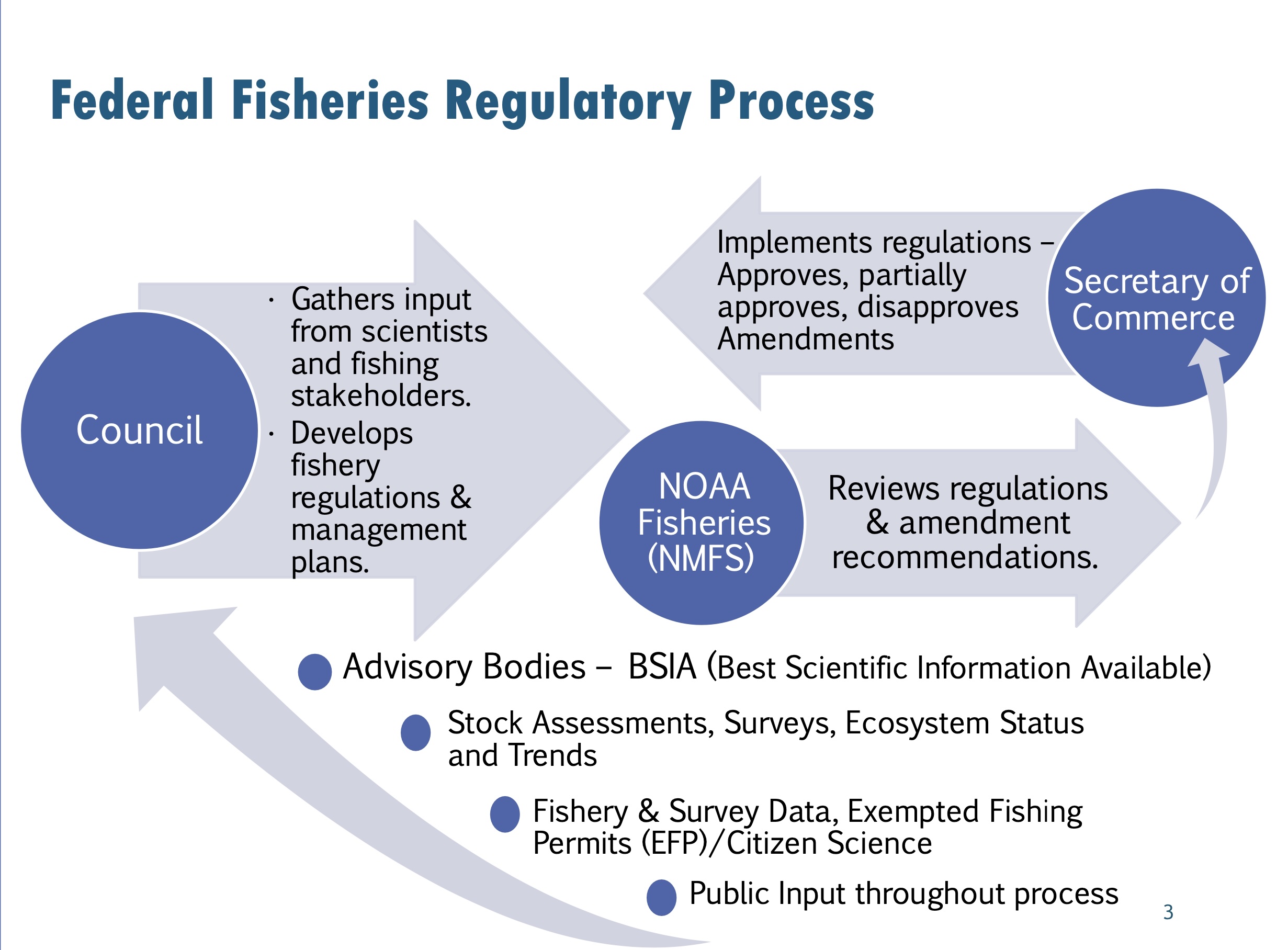
Federal Fisheries Regulatory Process explained
Download the PDF file, click here
Website: https://www.pcouncil.org/
Important Upcoming Dates:
March 4-9: March Council Meeting in Sacramento, CA
• Initial 3 alternatives for 2026 ocean salmon fisheries
• SAS meetings open to the public (in person only)
• Public can provide written and verbal testimony, either in person or online
March 23, 7-9 PM: Public Hearing in Santa Rosa, CA
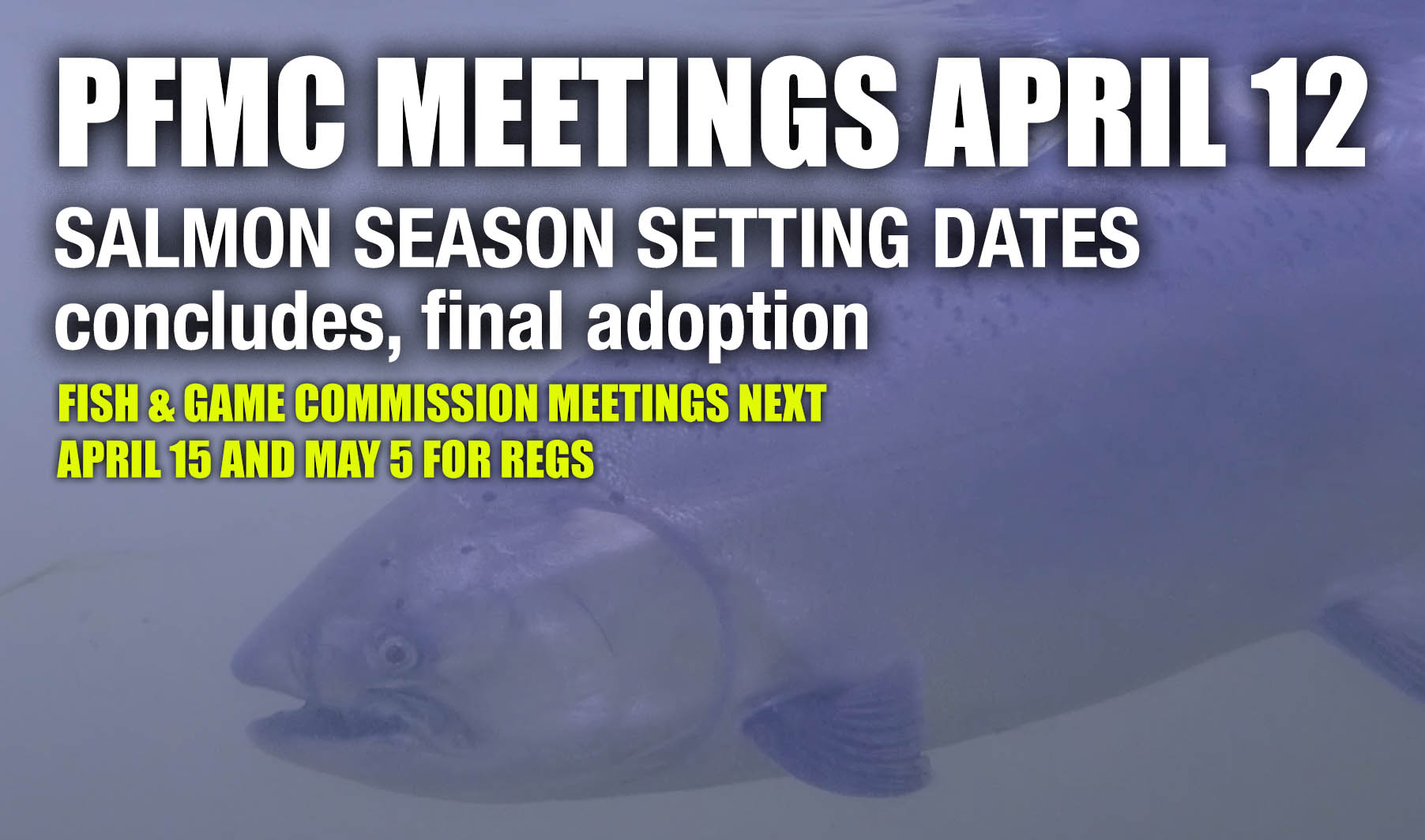
April 7-13: April Council Meeting in Portland, OR
• Final recommendation for 2026 ocean salmon fisheries
• Discussion on Sacramento River fall Chinook SMSY peer review and project group
• Public can attend SAS meetings and provide written or verbal comment
Summer 2026 TBD: Peer review on Sacramento River Fall Chinook SMSY
Jurisdiction
Three to 200 nautical miles off the coasts of Washington, Oregon, and California. Includes Idaho.
• Headquarters: Portland, OR
• Staff: Currently 17, normally 15
• Number of Voting Members: 14
• Number of Non-Voting Members: 5
• Fishery Management Plans: 4
• Fishery Ecosystem Plans: 1
Fishery Management Plan: Salmon
• Management: Chinook and coho salmon annually; pink salmon in odd-number years
• Range from Point Conception, CA up to Canada and Alaska
• Affected by non-fishing factors on land and at sea
• Management is complex! Lots of different jurisdictions
• Annual regulations set at the March and April Council meetings
• Main Advisory Bodies: Salmon Advisory Subpanel, Salmon Technical Team
Role of Council Members
Protect the public interest in fisheries by balancing interests (sometimes competing objectives) to make decisions for the greatest overall benefit to the Nation.
Advisory SubPanels
They include recreational and commercial fishermen, fish processors, academics, environmental group representatives, etc.
• Advisory sub panel recommendations are considered by the Council
• Salmon Advisory Subpanel (SAS) helps to develop ocean commercial, recreational, and Tribal ocean fishing season structure
Example: Salmon Advisory Subpanel
• 1 Washington Troll Fisheries
• 1 Oregon Troll Fisheries
• 1 California Troll Fisheries
• 1 Gillnet Fisheries
• 2 Processor
• 1 Washington Charter Boat Operator
• 1 Oregon Charter Boat Operator
• 1 California Charter Boat Operator
• 1 Washington Sport Fisheries
• 1 Oregon Sport Fisheries
• 1 Idaho Sport Fisheries
• 2 California Sport Fisheries
• 1 Tribal Fisheries (Washington Coast)
• 1 Tribal Representative (California)
• 1 Conservation Group
Salmon Technical Team (STT)
Monitors fisheries, prepares stock assessments and fishery impact analyses, and provides scientific advice to inform fishery management decisions
• Works closely with the SAS to develop potential ocean and recreational salmon fishing season structures
• Each year, develops four key salmon management documents that help inform the development and analyze the impacts of ocean and recreational salmon fishing seasons
Scientific and Statistical Committee
Each Council has an SSC
• Reviews all science to ensure the Council has the best information available for decisions (stock assessments, management measures, rebuilding targets, impact assessment models)
• Sets Overfishing Limits (OFL) and Acceptable Allowable Catches (ABC)
• The Pacific Council SSC’s 19 members include stock assessment scientists, biologists, economists, oceanographers from state, tribal, and Federal agencies, universities
• Operates by consensus
Policy Mandates
Magnuson-Stevens Act, National Standards National Environmental Policy Act (Alternatives, Public Process), Endangered Species Act, Marine Mammal Protection Act
PFMC Salmon Fishery Management Process in Months
January & February
STT drafts reports summarizing the previous salmon season (Review of Ocean Salmon Fisheries) and projections of expected salmon stock abundances for the coming season (Preseason Report I). Reports are made available on the Council website.
March
At the Council Meeting, the SAS develops and STT analyzes three alternatives for the upcoming season. The Council refines and adopts the alternatives for public review. STT drafts Preseason Report II, which analyzes the anticipated impacts of each alternative. Three public hearings (one in each coastal state) are held on the adopted alternatives.
April
At the Council Meeting, the 3 alternatives are reduced to one, which is refined by the Council with input from the SAS, STT, and public. Council adopts ocean salmon management measures for recommendation to NMFS. The STT drafts Preseason Report III, which describes the adopted measures and analyzes anticipated impacts on ocean salmon fisheries and salmon stocks.
May – October
New management measures take effect on May 16. States monitor inseason salmon catch and effort and fish migration/returns. Management measures may be adjusted through inseason action to help ensure both conservation and harvest goals are achieved. Salmon Methodology Review meeting occurs to review current or proposed methodologies used by salmon fisheries scientists.
Contact Angela Forristall, Salmon Staff Officer for questions:
angela.forristall@pcouncil.org